
Succeed in your Odoo implementation without chaos or extra costs
Implementing an ERP such as Odoo is a crucial step for any business. When done poorly, it can lead to costly errors, delays in operations, and disappointing adoption by teams. However, a well-planned and structured implementation can transform your internal processes, improve efficiency, and increase your profitability. In this article, we guide you through the six essential steps for successfully implementing Odoo while minimising risks and costs.

Why implementing Odoo is a critical moment for your business
Implementing Odoo is not simply updating your software ; it is a fundamental change in the way your business manages its processes. Poorly planned steps can disrupt production, lead to hidden costs, and compromise data quality. On the contrary, a successful implementation can centralise your information, automate your processes, and improve collaboration between your teams.
Common problems encountered during a poorly executed implementation :
- Excessive bureaucracy and manual workflows : These processes can slow down decision-making and hinder productivity.
- Overuse of Excel : Excessive use of Excel for data management creates inconsistencies and a lack of traceability.
- Lack of real-time visibility : Information is scattered across different systems, making it difficult to make quick and informed decisions.
- Delays in financial closing : Manual management of inventory and accounting processes can cause delays in the production of financial reports.
- Team frustration : Poor adoption of the system by end users can create a divide between technical and operational teams.
- Cost overruns : Incorrect assessment of the necessary resources can lead to unforeseen expenditure.
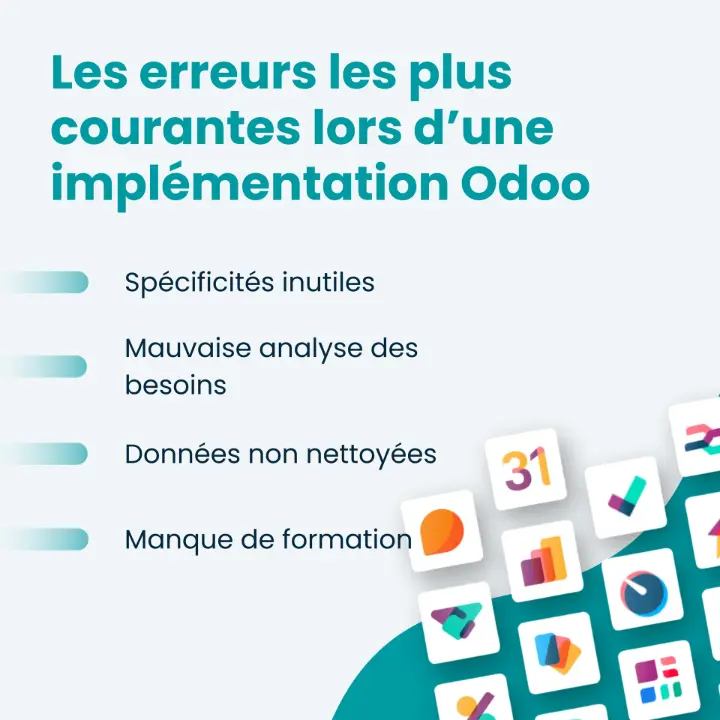
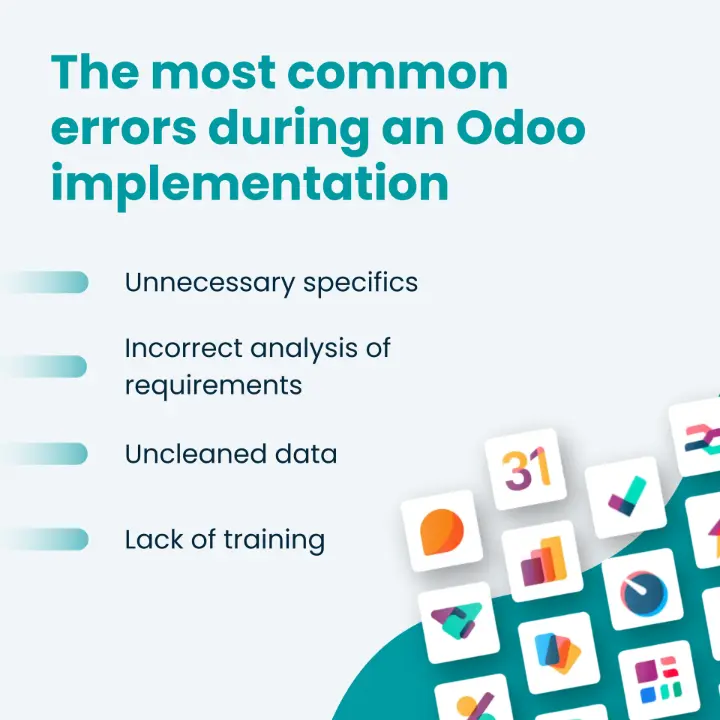
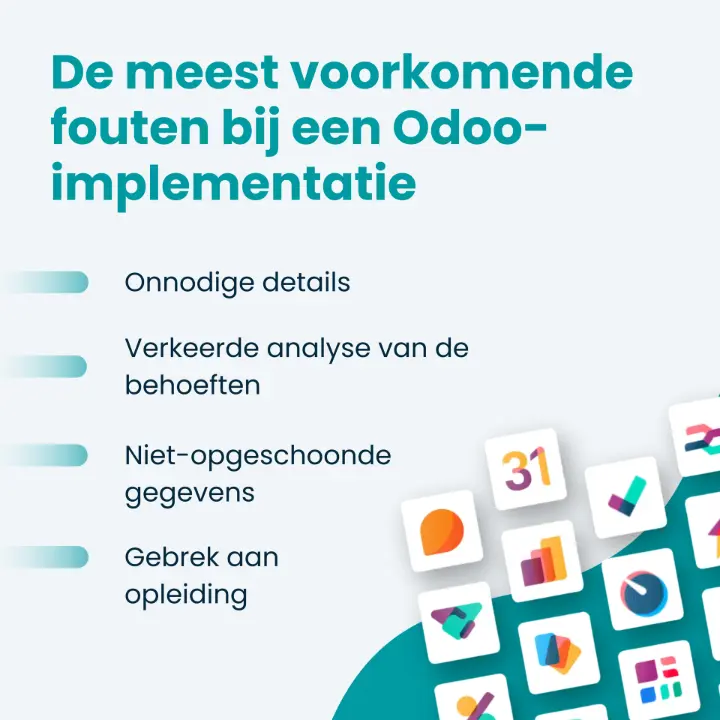
The risks of poor implementation
Poor implementation of Odoo can lead to errors at all levels, affecting the company's performance and profitability. Here are some typical risks:
- Data inconsistency : Incorrectly migrated or entered data can lead to errors in financial reports, affecting strategic decision-making.
- Impact on customer relations : If your Odoo system is not configured correctly, this can lead to delays in invoicing, poor stock management, and a poor customer experience.
- Poor adoption by teams : If employees are not properly trained or the system is too complex, this can slow down adoption of the system and reduce its effectiveness.
- Cost and schedule overruns : Poor planning and ineffective project management can lead to significant additional costs and delays.
The 6 steps to successful Odoo implementation
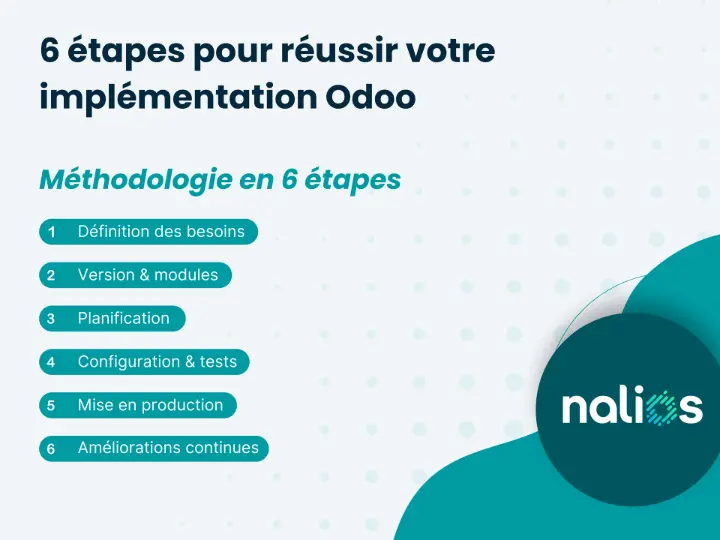
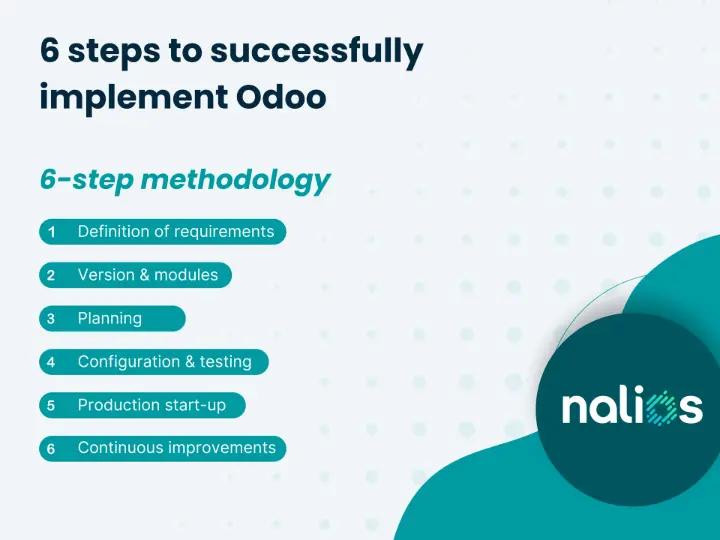
1. Defining requirements: Listening to departments and teams
The first step is to clearly define your company's needs. This requires a thorough analysis of your current processes and long-term objectives. A successful ERP implementation project always begins with a complete understanding of the expectations of the operational, sales, financial and other teams.
- Concrete example : Suppose a sales department complains about the slowness of the ordering process. In this case, you will need to define processes that enable order management automation and integration with real-time inventory.
- Recommendation : Organise workshops with the heads of each department to gather their requirements and priorities. This will provide a better understanding of the processes that need to be optimised and help to avoid configuration errors later in the project.
2. Choosing the version and modules: Selecting the right combination
The second step is to choose the Odoo modules that meet your business needs. You should opt for a combination that covers all the necessary features while ensuring flexibility for the future.
- Concrete example : If you are in the agri-food sector, you will probably need to integrate the Inventory, Sales, and Accounting modules to ensure accurate tracking of products, orders, and finances.
- Recommendation : Avoid over-customising the system in this initial phase. Choose a version that offers a good balance between standardisation and customisation. Opt for a modular deployment to facilitate future updates.
3. Planning: Structure and anticipate deadlines
Planning is essential for successful implementation. Good planning takes into account operational constraints and available resources to ensure implementation on schedule.
- Exemple concret : Un client qui a besoin de mettre en place Odoo pour gérer sa chaîne d’approvisionnement ne peut pas se permettre de bloquer ses équipes pendant des mois. Il est crucial de diviser le projet en phases claires, avec des jalons précis pour chaque étape (migration des données, tests, formation, etc.). Si vous venez d'une version antérieure, cette phase de planification est aussi le bon moment pour cadrer votre migration vers la version supérieure et éviter les mauvaises surprises le jour J.
- Recommendation : Set priorities from the outset and assign clear responsibilities to each team. Use project management tools to track progress and adjust priorities as necessary.
4. Configuration & testing: Validate and adjust
This step involves configuring Odoo according to the defined requirements, then performing tests to ensure that everything works as expected. You must also provide adequate training for your teams to ensure that the system is adopted smoothly.
- Practical example : Before going live, you can test a billing module by configuring different types of customers and transactions to ensure that the information is correctly integrated into the accounting system.
- Recommandation : Perform functional and user tests before going live. Ensure that all key processes are covered, and organise appropriate training sessions for users.
5. Production launch: Controlled launch
Once testing is complete, you can switch to production mode. This phase must be carefully planned to avoid any malfunctions once Odoo is operational.
- Concret example : If your business is a retailer with a large number of transactions, you may need to roll out the launch in several waves, starting with one or two sites before expanding to the entire business.
- Recommandation : Launch in several stages and ensure that support resources are available to quickly resolve any issues that may arise during this phase.
6. Continuous improvement: Listen and adjust
Implementing Odoo is not a one-off project, but an ongoing process. After going live, it is essential to monitor results, gather user feedback, and make continuous improvements.
- Concret example : One month after going live, you can organise feedback sessions with users to identify features that need improvement or additional modules that need to be added.
- Recommandation : Implement a regular reassessment plan to ensure that the system remains aligned with the evolving needs of the business.
Why choose Nalios?
At Nalios, we take a business-first approach, which means we place our clients' commercial objectives at the heart of every project. We offer a standard-first methodology, which guarantees a rapid return on investment while reducing long-term risks.
Our key strengths :
- Pragmatic approach : We use simple and effective solutions to solve complex problems.
- Team autonomy : We train your teams so that they can manage Odoo independently.
- Risk reduction : We guarantee rapid, stable and scalable implementation.
FAQ on Odoo implementation
-
How long does an Odoo implementation take ?
On average, implementation takes between 3 and 6 months, depending on the complexity of the project and the modules chosen. -
What are the risks of poor implementation ?
Risks include errors in process management, delays in financial reporting, unexpected costs, and low adoption by teams. -
How many specific developments should be planned for ?
Development requirements depend on the specifics of your business, but in general, a standard implementation requires little custom development. -
How can you ensure that teams adopt the new system?
Comprehensive training and a support phase after going live are essential to ensure successful adoption.
Ready to make your implementation a success ?
Request your free implementation assessment. Our experts are ready to help you secure every stage of your Odoo project and make it as efficient and profitable as possible.
Would you like to learn more about an optimal implementation?
Download our white paper