Get ready for Peppol e-invoicing with Nalios and Odoo
From 1st January 2026, electronic invoicing will become mandatory for all B2B transactions. Are you ready?
Starting from September 2026, French companies will have to send and receive electronic invoices through certified service providers called Approved Platforms (PA), formerly known as PDP (Partner Dematerialization Platforms).
Nalios helps you transition to Peppol electronic invoicing smoothly, securely, and in full compliance with European legislation, directly from your Odoo system.

Get your promo code now and access for free to our Peppol training
Peppol training – Simplify your e-invoicing!
- Set up the Peppol access point in Odoo for simplified management of your e-invoices.
- Optimise your Odoo system to save time and automate your invoicing process.
- Access our practical training and learn how to use Peppol for seamless and compliant electronic invoicing.
Register now to obtain your promotional code and begin simplifying your e-invoicing with Odoo!
More information about Peppol
Peppol training– Simplify your e-invoicing!
- Implement the Peppol access point in Odoo for simplified management of your e-invoices.
- Optimize your Odoo system to save time and automate your billing process.
- Follow our practical training and learn how to use Peppol for smooth and compliant electronic invoicing.
Contact our team for more information about Peppol.
Are you still sending your invoices the old-fashioned way ? That's about to change.
Peppol is now mandatory for invoicing in the EU public sector. For many Odoo users, switching to this system may seem risky.
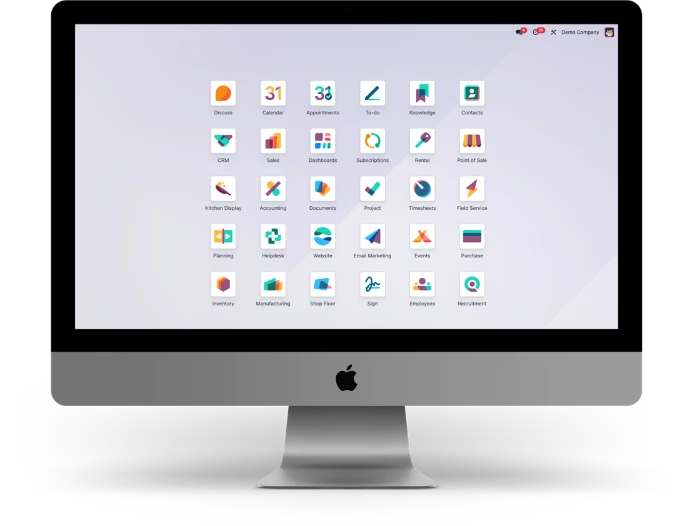
We explain electronic invoicing to you
Join our various events on e-invoicing.or review our past webinars.
What is Peppol electronic invoicing ? Why is it important today ?
Electronic invoicing is no longer a topic reserved for large companies. In Belgium as in France, legislation is rapidly evolving to make B2B e-invoicing mandatory for all VAT-registered businesses. This transformation affects millions of economic actors, including freelancers, micro-enterprises, SMEs, mid-sized companies, and large enterprises, who must adapt their tools and processes before the legal deadlines.
Contrary to popular belief, sending a PDF by email or via a sharing platform does not constitute a compliant electronic invoice. A true e-invoice is a structured file, automatically readable by accounting software, transmitted via a secure and certified network. In Belgium, this network is Peppol. In France, invoices must transit through Approved Platforms (PA), formerly known as PDP.
Since April 2020, all public authorities in the EU must accept Peppol electronic invoices, which are also being adopted by thousands of private companies in Europe and beyond.
If your company sells to the public sector or is considering expanding internationally, Peppol is no longer an optional extra.
Belgium & France: two timelines, one urgency
In effect since January 1, 2026
Deployment starting from September 1, 2026,
registration in the central directory before September 1, 2026
The concrete benefits for your business:
Beyond regulatory compliance, the transition to electronic invoicing represents an opportunity to sustainably modernize your financial processes:
Each invoice is timestamped, secured, and archived. Simplified audits and VAT controls.
Enjoy a switch to electronic invoicing without interruption to your business. Nalios takes care of the technical setup and connection to Peppol, so you are compliant by the legal deadline.
We also train your accounting teams on the new billing flows, and remain available for ongoing support to ensure that each invoice is issued and received without a hitch.
How Nalios helps your business prepare for Peppol electronic invoicing?
We make your transition to Odoo easy, fast, and 100% secure.
Native Odoo Peppol configuration
We integrate Peppol directly into your Odoo workflows — no external systems or manual steps are required.

Guide to Peppol access points
We help you choose and connect to the certified Peppol access point that suits you best, taking care of all the technical configuration.

Guarantee of full compliance
We ensure that your invoices comply with the Peppol format and legal standards in all EU countries.
Team training included
We train your staff to manage Peppol invoicing with confidence, with no hidden costs or recurring support fees.
Expertise in local taxation, finance, and compliance.
Nalios brings together over 50 multilingual experts. We combine deep local market knowledge with global Odoo expertise to deliver faster and smarter implementations.
We also run in person workshops and have local offices in:
- France
- Belgium
- Luxembourg
- Switzerland
- USA

Get your promo code now and access our Peppol training for free.
FAQ: Frequently Asked Questions about electronic invoicing
Everything Belgian and French companies need to know about B2B e-invoicing, Peppol, and Odoo.
General Information
Electronic invoicing refers to the issuance, transmission, and reception of invoices in astructured digital format, automatically processable by accounting software. It is not a simple PDF sent by email — this type of document will no longer be considered compliant in both countries.
A compliant electronic invoice is a coded file (XML, UBL, Factur-X, Peppol BIS) containing all billing data in a standardized format and transmitted via a certified network or platform.
No.Neither in Belgium nor in France, a PDF, even if sent by email or uploaded to a platform, constitutes a compliant electronic invoice under the new regulations.
Paper invoices and unstructured PDFs will no longer be allowed for the relevant B2B transactions. Only structured formats (machine-readable) transmitted via official channels will be accepted.
Peppol(Pan-European Public Procurement OnLine) is a standardized European network for the secure exchange of electronic documents such as invoices, orders, and delivery notes. It can be compared to a digital postal network, with a reception and emission hub in each member country.
In Belgium, Peppol is themandatory standard channelfor the exchange of B2B invoices since January 1, 2026. The standard used is Peppol BIS 3.0, compliant with the European standard EN 16931. Other exchange methods remain possible if both parties agree, provided they comply with the same EN 16931 standard.
In France, Peppol is used but the obligation goes throughApproved Platforms(PA) that can rely on Peppol or other standards.
Belgium - Specific Obligations
The obligation applies toall Belgian companies subject to VAT, regardless of their size: large companies, SMEs, self-employed, non-profit organizations, and holding companies with an active VAT number.
The following are exempt from the issuance obligation:
- Exempt operations under Article 44 of the VAT Code (certain medical professions, education, etc.)
- Taxable persons not established in Belgium without a permanent establishment
- Invoices addressed to private customers (B2C)
- Cross-border transactions (for now)
Attention:even if you only invoice private individuals, you must be technically capable ofreceivingelectronic invoices from your suppliers.
The royal decree of July 8, 2025, provides for a scale of administrative fines:
- €1,500for a first offense
- €3,000for a second offense
- €5,000for each subsequent offense
Atolerance periodfrom January to March 2026 has been granted, but only under strict conditions: the company must prove that it has taken reasonable steps in a timely manner and that the delay is beyond its control.
To be accessible on the Peppol network, a company must have aPeppol ID, a unique identifier linked to the Belgian VAT number (corresponding to the BCE number). This identifier is generated through software or an ERP connected to acertified Peppol Access Point.
The concrete steps:
- Check that your accounting software or ERP (like Odoo) supports Peppol and the Peppol BIS format
- Activate the connection to a Peppol Access Point via your software provider
- Obtain your Peppol ID and activate it for sending and receiving
- Test with a few business partners before going live
The list of software approved by the Belgian Peppol Authority is available on the official websitebosa.belgium.be.
In parallel with e-invoicing, Belgium plans to introduce a system ofe-Reporting in near real-timein 2028. This system is part of the European directiveViDA (VAT in the Digital Age).
Specifically, the data from electronic invoices transmitted via Peppol will be automatically communicated to the Belgian tax administration, without any additional steps from the companies. Peppol is the backbone of this future real-time tax reporting system.
France - Specific obligations
The reform concernsall companies subject to VAT, established in France, that carry out B2B transactions with other French companies. This includes micro-enterprises, even those exempt from basic VAT.
Excluded are:
- B2C relationships (invoices to individuals)
- Non-profit organizations without economic activity
- Companies not established in France for their international B2B operations
- Certain VAT-exempt operations (health, education, insurance, etc.) — but these companies remain subject to the obligation of receipt
AnApproved Platform (PA), formerly known as PDP (Partner Dematerialization Platform), is a service provider registered by the State (via the DGFiP) to manage the transmission of electronic invoices and e-reporting.
Its role is to:
- Issue, transmit, and receive electronic invoices between businesses
- Extract and transmit tax data to the administration (e-reporting)
- Ensure the secure archiving of invoices
Yes, its use is mandatoryfrom September 1, 2026. Businesses cannot exchange electronic invoices directly with each other without going through a PA. The official list of registered PAs is available onimpots.gouv.fr.
The timeline is progressive:
- September 1, 2026:Obligation toreceiveelectronic invoices forall businesses(regardless of their size). Large enterprises (GE) and mid-sized enterprises (ETI) are also required toissuefrom this date.
- September 1, 2027:Obligation toissueelectronic invoices extended tovery small enterprises (TPE), SMEs, and micro-enterprises.
Important:Even though the obligation to issue only comes into effect in 2027 for small structures, all businesses must register with an Approved Platform before September 1, 2026, in order to receive invoices from their GE and ETI suppliers.
Three structured formats are accepted:
- Factur-X: Franco-German hybrid format (PDF + embedded XML). Recommended for its simultaneous human and machine readability.
- UBL (Universal Business Language): International XML format, also used on the Peppol network.
- CII (Cross Industry Invoice): International XML format of the UN/CEFACT standard.
Four new mandatory mentions will also need to appear on all invoices starting from September 1, 2026 (SIREN number, delivery address, etc.). Odoo natively manages these formats and can be configured to generate them automatically.
In addition to e-invoicing (issuing and receiving invoices), the French reform imposes thee-Reporting: the automatic transmission to the tax administration of transaction and payment data.
This particularly concerns:
- B2C operations (sales to individuals)
- Transactions with foreign companies not established in France
- Payment data associated with B2B invoices
The Approved Platform chosen by the company is responsible for transmitting this data to the Public Billing Portal (PPF), which consolidates the information for the DGFiP.
Odoo and technical implementation
Yes.Odoo natively supports the Peppol network and the electronic invoicing formats required in Belgium and France. The platform includes an electronic invoicing module that allows for:
- The generation of invoices in Peppol BIS 3.0 format (Belgium) or Factur-X/UBL (France)
- Connection to a certified Peppol Access Point
- Sending and receiving invoices via the Peppol network directly from the Odoo interface
- Automatic and compliant archiving of invoices
For France, Odoo can be connected to a certified Approved Platform to ensure full compliance, including e-reporting.
Not necessarily. If your current software is compatible with Peppol (Belgium) or Approved Platforms (France), an update or configuration may be sufficient.
If your solution is not compatible, this is the ideal opportunity to migrate to a complete and sustainable ERP like Odoo, which natively integrates e-invoicing standards. Compliance costs can be limited: often, it involves a low subscription cost to an Access Point and a few hours of setup.
In Belgium, a temporary tax support measure even allows for a deduction of120 %of the costs of implementing e-invoicing (software, subscription, consulting, training).
As a certified Odoo Gold partner, Nalios supports Belgian and French companies at every stage of their transition:
- Audit & diagnosis: evaluation of your current system and billing flows
- Native Peppol configuration in Odoo: direct integration into your workflows, without external systems
- Choice and connection of the Access Point: selection and configuration of the Peppol access point or the appropriate Approved Platform
- Training for your teams: complete onboarding, without recurring support fees
- Compliance guarantee: your invoices comply with the legal formats required in Belgium and France
Nalios has offices in Belgium (Wallonia, Flanders) and France (Paris, Lille, Nantes, Rouen, Cannes, Antilles-Guyane), with local experts who understand the regulatory specifics of each country.
The transition duration depends on your starting situation:
- Odoo already in place:a few days to a few weeks to activate and configure Peppol, connect an Access Point, and test with your business partners.
- Migration from another ERP:a few weeks to a few months depending on the complexity of your current system.
- Complete Odoo deployment:from 1 to 6 months depending on the size of the company and the desired functional scope.
In any case, Nalios recommends not to wait until the last weeks before the legal deadline. The testing phase with your partners and suppliers requires a minimum of preparation.