Odoo Integration Expert: Optimize Your Processes
Integrate Odoo in a smarter way and faster with an Odoo Gold partner .
Ask for a demo







What does an expert Odoo ERP integrator do?
An Odoo integrator will customise, implement and support Odoo to meet a company's specific requirements.
Working with a qualified partner can greatly improve the optimisation of a company's operational processes, which in turn can boost commercial activity, thanks to Odoo integration.
What are the advantages of choosing Odoo as your ERP ?

Why choose Nalios as your Odoo integrator ?
Industries that trust us
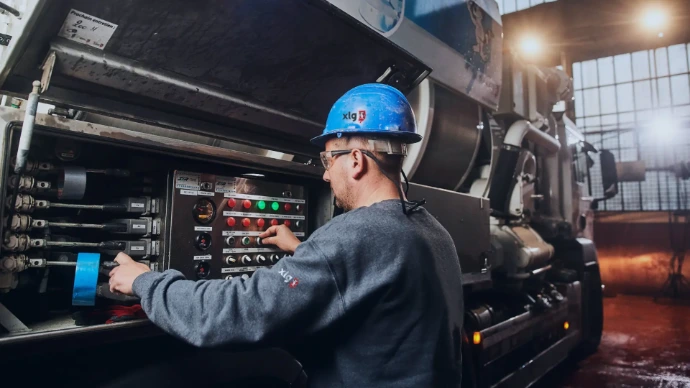
Optimize your inventory and production management with the Odoo ERP. Easily track stock levels, automate replenishments, and generate production orders in just one click.


The Impact of an Odoo Gold Partner ?
Choosing an Odoo Gold Partner like Nalios guarantees a successful implementation and tailored support through :
With Nalios, you gain a reliable, experienced, and committed partner for the success of your Odoo project.
The modules useful for your business
Odoo offers a suite of modules designed to cover the essential needs of businesses, regardless of their industry. Among the most widely used are CRM to structure customer relationships, Accounting to manage finances, and the Project module to organize work and monitor profitability.
The financial heart of the company
Manage client and supplier invoicing, track cash flow and payments, automate VAT, declarations (e.g. Peppol) and have a clear vision of profitability
The entry point of customer relationships
Centralize opportunities, structure the pipeline, track prospects, quotes, and follow-ups, and improve collaboration between the different departments
Drive execution
Follow projects and tasks, log the time spent, analyze profitability by client / project and plan teams better
Nalios' Methodology in 4 steps
Analysis
We start by understanding your needs, processes, and challenges. This step helps frame the project and define together the best way to use Odoo.
Migration
We migrate your data and install Odoo to ensure it’s ready for use. The goal is to start with a clean, secure foundation tailored to your environment.
Integration
We integrate Odoo into your daily processes. Where relevant, our experts configure and adapt the tool to fit your specific needs, while prioritizing Odoo’s standard functionalities as much as possible.
Optimization
Once Odoo is in place, our experts help you improve your workflows, automate tasks, and leverage the full potential of the solution.
Our support Nalios
Service excellence
At Nalios, we understand the importance of responsiveness. That's why we're committed to providing a response within 8 hours to all your questions, ensuring ongoing, effective support for your business.
Our collaboration
At Nalios, we implement Odoo so that you can manage your ERP independently and autonomously. Your team is trained, supported, and empowered to take full control of the tool, ensuring sustainable adoption and continuous evolution with complete freedom.
Diversified sectors
Our achievements in various sectors demonstrate our expertise in delivering high-performance Odoo solutions. Nalios has proven its competence in food production, retail, B2B services, heating & sanitation, and many other sectors.
Our commitment
Our certified consultants deploy Odoo in many sectors: services, industry, distribution, retail, and more. Take advantage of our recognized expertise to centralize your data, reduce costs, and lighten the administrative burden on your teams.

+450 Successful projects
As a certified Odoo Gold Partner, we hold the highest level of recognition and have the expertise to lead even the most complex projects to success.

Local experts
Offices in France, Switzerland, Belgium, the United States, the French West Indies, and French Guiana, staffed by former Odoo employees

Certified Gold Partner
Our Gold certification means we're equipped to tackle any implementation challenge, regardless of scope or industry.
Grow your business with Nalios
When you choose Nalios as your Odoo integrator, you benefit not only from our technical expertise and personalized approach, but also from our unwavering commitment to service excellence. Our aim is to boost your internal management by providing the ideal solution, focused on automation, centralization and efficiency, to propel your business to new heights of success.
Would you like to find out more about the Odoo implementation process ?
Find out more about our white papers on these subjects.
Upgrade to Odoo v19 without any hassle
Let's discuss your Odoo integration

Frequently Asked Questions
Here are some frequently asked questions about an Odoo integrator:
You can install Odoo on your own, and for a small organization that only uses one or two standard applications, it's perfectly doable. We say this bluntly because it's true.
The need for an integrator arises as soon as several services share the same database. What takes time is not the installation, but resolving the structuring questions before the first entry: the chart of accounts, the analytical structure, the units of measurement, the access rights, who enters what and when. These decisions are difficult to modify later, and this is what distinguishes a project that lasts six months from one that does not.
The other contribution, less visible, is knowing what not to do: reproducing in Odoo the habits of your old software, or developing specific solutions for a need that the standard already covers in another way.
Odoo classifies its partners by levels, from the most basic to the highest, according to the number of certified consultants and the volume of projects completed. Nalios is Gold Partner, one of the highest levels, and our consultants are certified from version 8 to version 19.
In practical terms, what this changes for you: direct access to the publisher's support channels when a problem exceeds configuration, knowledge of upcoming developments before their release, and consultants whose skills are verified on each version rather than just claimed.
That said, certification is not a guarantee of results. It proves technical competence, not understanding of your business. Our two pieces of advice, applicable to any provider, including us: ask for references in your sector, and ask to speak to a client whose project faced difficulties. It's more informative than a list of logos.
Our method consists of four steps.
The analysis. We start from your processes and your pain points, not from a list of modules. This step serves to frame the project and to decide together the best way to use Odoo at your place.
The migration. We install Odoo and take over your data, to start on a clean and secure basis. The quality of your starting data determines the next steps: this is often where the timeline is decided.
The integration. We configure the tool to your actual processes, first exhausting the possibilities of the standard before considering any development.
The optimization. Once in production, we improve the flows, automate what can be automated, and leverage what you have not yet used.
Between integration and optimization, there is a moment we never neglect: the training of your teams and the first weeks of real usage. This is where adoption is decided, and a technically perfect project that no one uses remains a failed project.
Yes, and this is an important part of our work. Odoo has a complete programming interface, which allows it to be connected to most tools on the market.
The most common cases with our clients: connection to banks for statement synchronization, exchange with your accountant or your social secretariat, an existing online store, a field tool already in place, and exchanges with business partners. On this last point, we publish our own connector, the Nalios EDI Connector, published on the 'Odoo Apps Store, which manages EDI exchanges via FTP, SFTP, webhook, and AS2 in EDIFACT, XML, JSON, and CSV formats. Electronic invoicing via the Peppol network is also part of our current topics.
The question we systematically ask before connecting anything: does this tool really need to stay? An interface is an element that must be maintained with each version upgrade. Sometimes keeping it is the right decision, sometimes the tool was there only because the old system couldn't do it.
There is no useful average duration, because the determining factor is almost never the size of the company.
Three elements affect the timeline much more than your number of users: the state of your data to be migrated, the number of truly different processes to cover, and the availability of your teams to validate them. The third is the one that no one anticipates: a project rarely slows down because of the tool, it slows down because the person who needs to validate the chart of accounts or the item lists is in production.
You have a single and stable contact who knows your case. This is the first complaint made against integrators in this market, and that’s why we do not subcontract any of our expertise: everything is done by our internal team, with direct responsibility.
Specifically, the project is managed through regular progress points, a written and validated scope at each stage, and demonstrations using your own data rather than a demo set. We commit to responding to your questions within 8 hours throughout the duration of the project.
On your side, one condition matters more than all the others: appoint an internal project manager. Not an IT person, someone who knows your processes and has the authority to make decisions. Without this role, every decision escalates and the project stretches.
Our exit objective is clear: for you to be autonomous. Your teams are trained to manage the tool without relying on us for every change.
An Odoo budget consists of three elements that need to be distinguished, because they do not go to the same place.
The licenses, billed directly by Odoo based on the number of users and the chosen edition. They do not depend on us.
The integration, that is to say our work of scoping, configuration, data migration, and training. This is the most variable part, and it is quantified after analysis.
The follow-up, once in production: the updates, support, and version upgrades.
What really varies the second item: the number of different processes to cover, the quality of the data to be migrated, the number of interfaces to create, and the extent of customization. On this last point, our position is constant: each specific development is a debt that you repay with each version upgrade, and Odoo publishes one per year. We exhaust the standard before writing a line of code.
Yes, and that is what we recommend in the majority of cases. It is even one of the main advantages of Odoo: the applications share the same base, so adding one later does not require migration or a new interface.
The most common start focuses on the commercial and financial core, sales, purchases, and accounting, before expanding to inventory, production, or human resources.
A clarification that avoids disappointments: starting small does not mean making no decisions. Some choices made at the start condition what you will be able to do later, particularly the analytical structure and how to code your items and your clients. We frame them from the very first step, even for the modules that you will only install in two years.
Yes, and we develop them, including modules that we publish on the Odoo Apps Store like our EDI connector.
But our reflex is the opposite of what is expected from a service provider. Before any development, we look for three things: does the standard do it differently, does an existing module in the ecosystem already do it, and does the request come from a real need or from the habit of the old software. In the majority of cases, the answer lies in one of the three.
When development is justified, we build it in a way that survives version upgrades, and we tell you what it will cost to maintain. A custom module is never free after its delivery, and it is this part that quotes often forget to mention.
The two requests that we almost systematically refuse: to reproduce exactly the screen of your old software, and to develop a report that the standard already produces in another form. In both cases, the real request is a need for reference points, and it is resolved through training.