Odoo Logistics, from the receiving dock to customer delivery
A stock project is not about the software features. It is about having an accurate inventory at the start, locations that match the actual warehouse, and operators who scan because it simplifies their lives.
Discuss with our experts Discover our EDI connector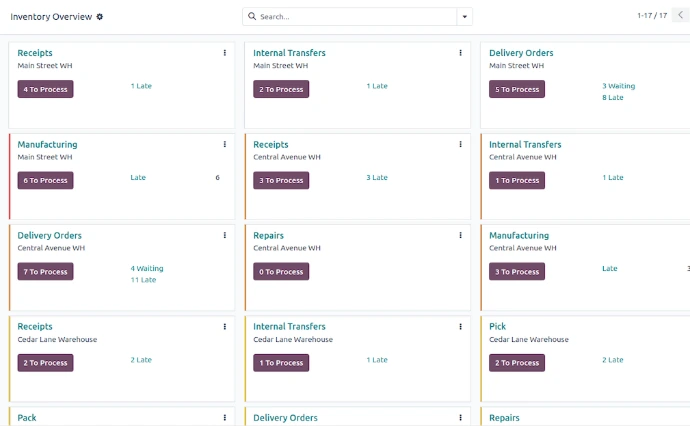
Nalios supports
Why a stock project goes off track.
Five causes, and none are a lack of functionality.
Receiving, storing, preparing, shipping
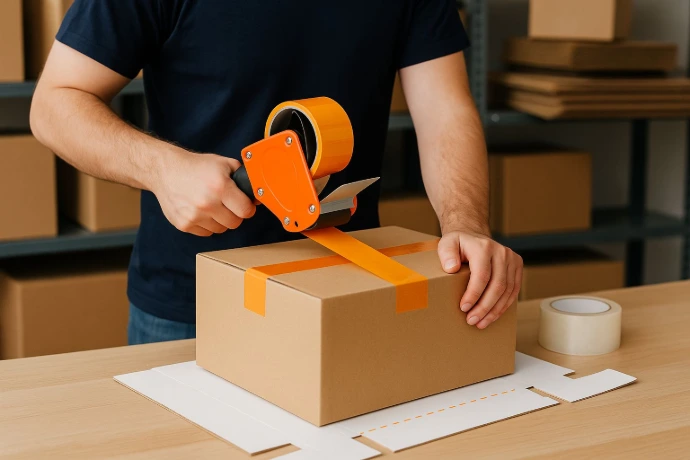
The three basic flows, and the settings that determine the time spent on each.
The number of steps is a choice, not a fatality. Odoo allows you to handle a reception in a single operation, or to break it down into receiving, then checking, then storing. Our advice: start with the minimum number of steps that gives you the traceability you need. Each added step is one more validation in an operator's day.

The barcode, and what it really asks for
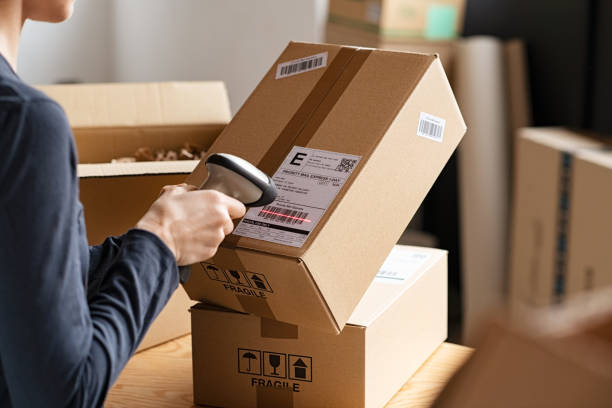
The barcode application transforms operations into scans: product, batch, package, location. The operator no longer types anything on the keyboard, and it continues to function when the network goes down, which matters in a poorly covered storage area or in a cold room.
The real issue is material and human. What type of terminal, at what location, with what autonomy, and who scans what. We have seen excellent projects on paper fail because the only terminal was at the other end of the aisle, and modest projects very well managed because each operator had theirs in their pocket.
The point to check before any purchase: the actual network coverage in your storage areas, measured on-site, not deducted from the plan.
Replenishment, and the end of avoidable shortages
Odoo calculates what needs to be ordered or manufactured based on minimum and maximum stock rules, lead times, and needs already committed by customer orders. You can also trigger the purchase only upon order, or have it delivered directly from the supplier to the customer.
What makes the difference between a rule that works and a rule that sleeps: the provided lead times must be the actual lead times, not those of the contract, and the rules must be reviewed at least once a year. We systematically integrate this review into post-startup support, because no one does it spontaneously.
Traceability, from the received batch to the delivered customer
Each item can be tracked by batch or by serial number, upon receipt, in stock, in production, and at shipping. You start from a material batch number and obtain the list of finished products concerned and delivered customers. Or the reverse, starting from a finished product or a customer.
This is what drives projects in the agri-food, cosmetics, pharmaceuticals, and industrial subcontracting sectors. Our field advice remains the same: do not activate serial number tracking across the entire catalog as a precaution. Each level of detail adds an entry, and an extra entry is a bypassed entry.
The specific constraints of the agri-food sector, expiration dates, and first-out the nearest expired, are detailed on our page Agri-food ERP.

Carriers, labels and tracking
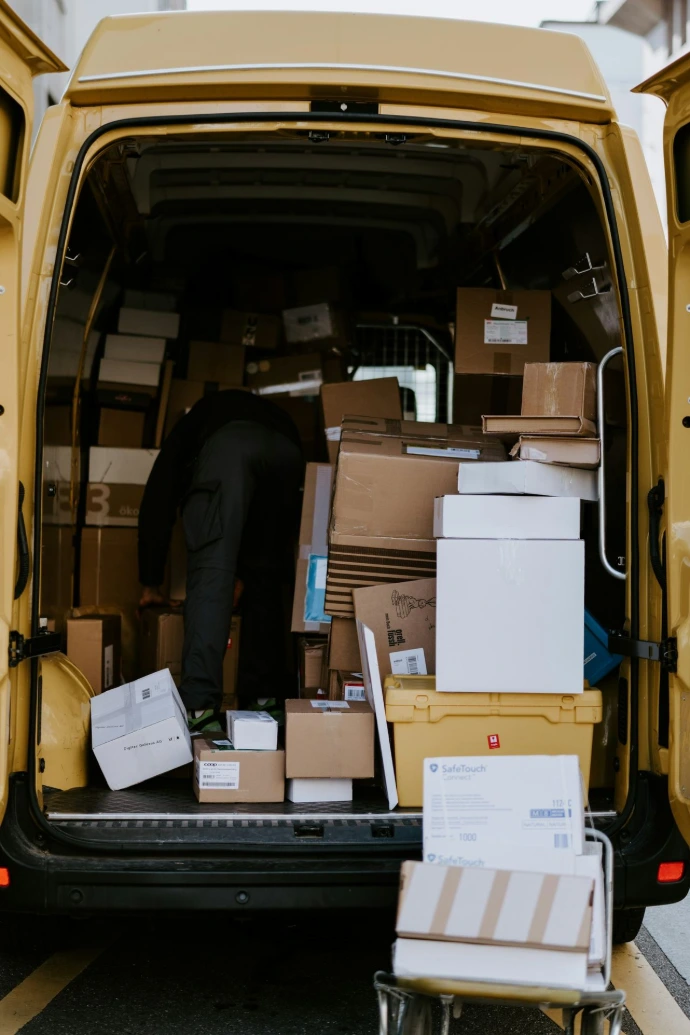
Odoo natively connects to major parcel carriers to edit labels, compare rates, transmit shipments, and return tracking to the customer. The order generates the label, the label generates the tracking number, and the customer receives their link without intervention. Integration work rarely focuses on the connection itself. It focuses on your catalog of parcel types, on the rules for choosing the carrier based on destination and weight, and on handling returns.

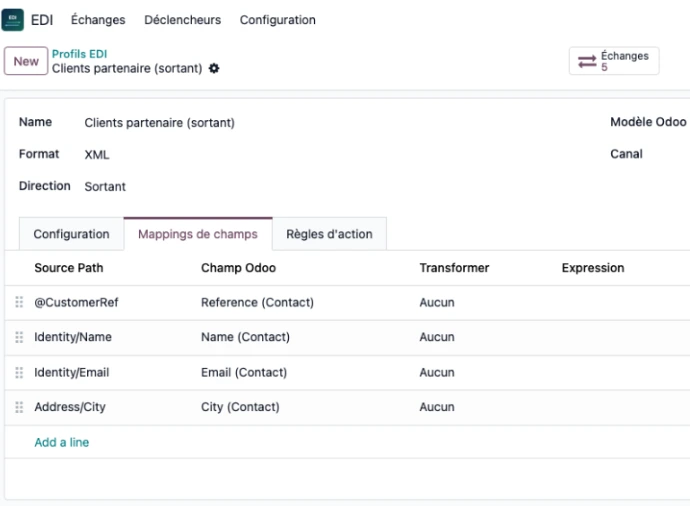
EDI with your distributor clients, with our own connector
When you deliver to large retail, a purchasing center, or a major client, it is your client who imposes the format of orders, shipping notices, and invoices. The usual response from an integrator is a specific development per partner and per format. We have done it differently: we publish our own EDI connector for Odoo, the Nalios EDI Connector, published on the Odoo Apps Store.
The real work is not about the protocol, it is about matching item codes and location codes specific to each partner, and what we do when a message is rejected. This is where we come in.
The module is documented in French and English, available on the Odoo Apps Store. Regarding electronic invoicing, mandatory in Belgium and being generalized in France, see our page electronic invoicing and Peppol.
What your stock is worth, and what the accounting says
Odoo values stock at standard cost, weighted average cost, or first in first out, with or without accounting entries generated in real time for each movement. The choice is made once, it is structural, and it is discussed with your accountant before the start, not after.
The operational corollary is the inventories. Rather than an annual two-day halt, Odoo allows counting by area or by family throughout the year, with a discrepancy tracked and justified at each count. Many of our clients discover at that moment that their inventory discrepancy cost more than the project.
The accounting setup for all this is detailed on our page accounting.

Taking back an Odoo stock that no longer reflects reality
The most common case after a poorly framed first project, and the most commercially mature segment.
What we almost always find: locations created over time without overall logic, regular manual adjustments to align the theoretical with the real, restocking rules disabled one by one because they suggested anything, and a parallel spreadsheet that the warehouse manager considers the true reference.
Our intervention begins with a three-part assessment: the actual gap between theoretical stock and the field on a sample, the logic of locations compared to usage, and the inventory of specific developments with their costs at each version upgrade. The next steps are decided based on this. Restoring accurate stock almost always costs less than changing ERP.

Who is an ERP for stock management aimed at?
What changes from one profession to another is not the software, but what comes out of the warehouse and at what pace. Here are the profiles we most often support.
Don't just upgrade your stock, upgrade your way of working
We start with an analysis of your current system, then our team supports you at every step:
Nalios, your trusted Odoo Gold Partner.
In a logistics project, the temptation is to model everything from day one: every bin, every step, every control. We intentionally start simpler. A correct stock with a rough structure is infinitely better than an incorrect stock with a perfect structure. We refine later, when the operators have settled in, and we refine based on what they themselves request.
Intégrateur Odoo de +500 entreprises ambitieuses.



Frequently Asked Questions
Here are some frequently asked questions about logistics in Odoo:
For the majority of SME and mid-sized warehouses, yes: locations, storage and exit strategies, batch preparation, barcodes, and traceability cover the need. For a very high-throughput warehouse with voice picking, conveyors, or robots, a specialized WMS remains necessary and interfaces with Odoo.
Yes, both, with routes that determine where each product is stored and shipped, and flows between companies of the same group. The real work focuses on harmonizing data between sites, not on the technique.
Yes, to the main parcel carriers, for label printing, rate comparison, and tracking. For complex multi-stop freight, a dedicated transport tool takes over, interfaced with Odoo for orders and billing.
Yes. We publish our own EDI connector for Odoo, available on the Odoo Apps Store, which covers FTP, SFTP, webhook, and AS2 channels and the formats EDIFACT, XML, JSON, CSV, and fixed columns. Each new partner is configured instead of developed.
Yes, and it's even an opportunity to reset it. We do not take over an approximate stock: we organize a count before the switch, at least on high-turnover and high-value families. Starting with incorrect stock causes the teams to lose trust within a week.
Not necessarily everywhere. Many of our clients start with higher volume flows, then expand. What needs to be checked before any purchase is the actual network coverage in your storage areas.
Would you like to learn more?
Contact our experts